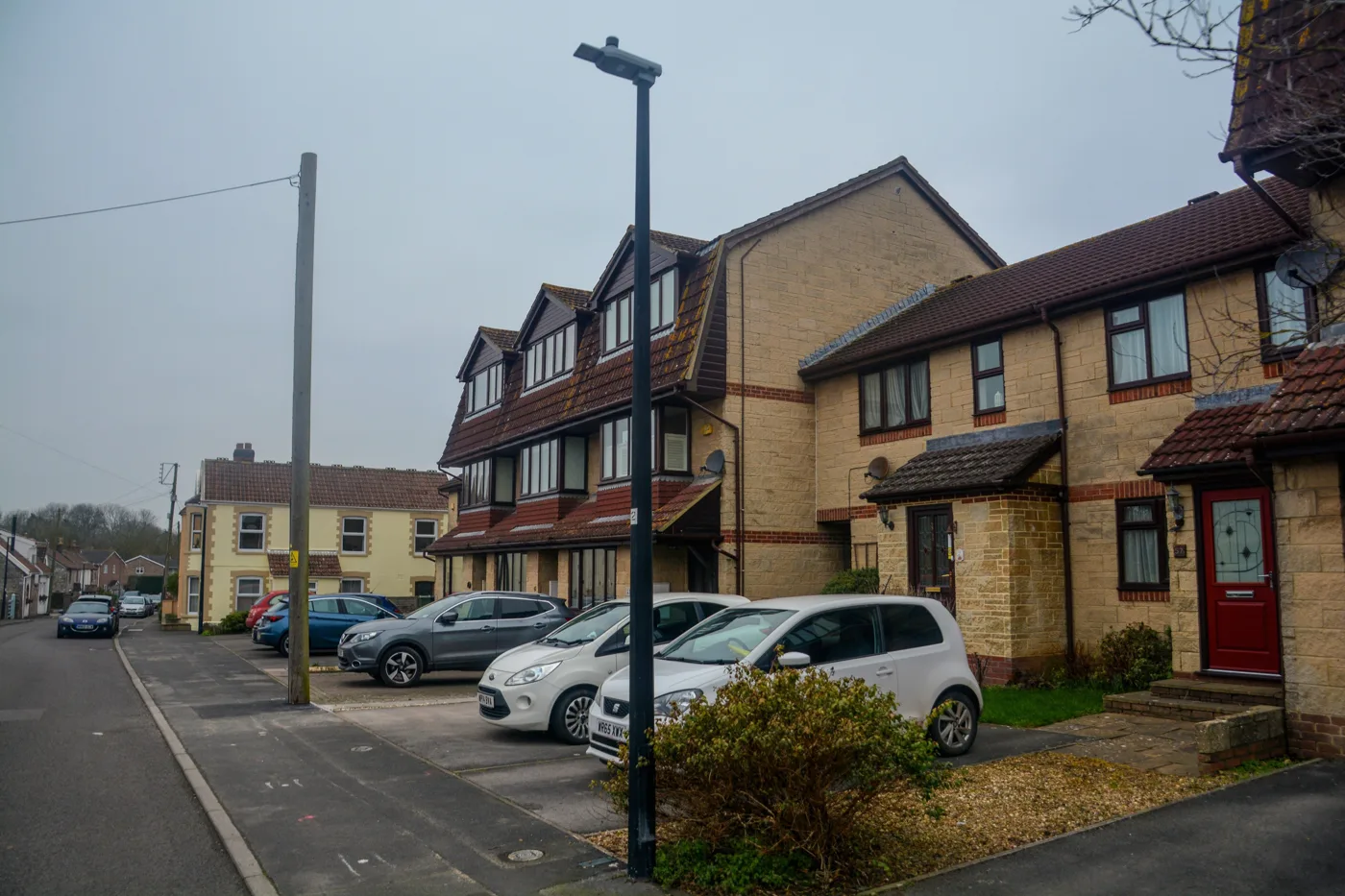

North Somerset says the Yatton road is now a risk to its bin crews. The 8 September decision starts a process that can bill homeowners for the repairs.
North Somerset Council will decide on Monday 8 September whether to start the legal process for repairing Wakedean Gardens in Yatton, a road it does not own and has never adopted.
The council says the road has got bad enough to threaten its bin collections. In a notice signed on 28 August by its Director of Environment, Assets and Transport Services, it gives this as the reason the decision cannot wait:
The condition of the unadopted road presents an ongoing health and safety risk to Council waste and recycling crews and threatens the Council’s ability to maintain its statutory waste collection service. Interim collection arrangements and temporary repairs have been implemented but are no longer considered sustainable.
That notice was published on the council’s website on 1 September. (North Somerset Council, notice of a key decision not in the Forward Plan, 28 August 2026)
The decision will be taken by the Cabinet Member for Planning and Environment, advised by the Director and the council’s Section 151 finance officer.
Why homeowners should read this one
The important part is not the repair. It is who pays for it.
The council set out its intention in the capital programme report to full Council on 24 February. It would carry out the works on behalf of residents and then adopt the road. On the money, its own words were:
Homeowners have the responsibility to pay for the works and arrangements would be put in place to recover a financial contribution from each property.
The same report describes the road as “currently unadopted and in a very poor state of repair” and says there is “a risk that the council cannot meet its statutory duty to collect waste from these properties”. (North Somerset Council, Council reports pack, 24 February 2026, page 31)
The council has not published a cost for the scheme, or the amount any individual property would be asked for. Both would normally come later in the process.
What the private street works process actually does
The route the notice names is the private street works code in Part XI of the Highways Act 1980. It is the standard mechanism for making up a private road, and it works in a fixed order.
- The council resolves to carry out the works. Under section 205, the expenses it incurs are then apportioned between the premises fronting the street.
- It publishes a specification, plans, an estimate and a provisional apportionment, so each owner can see the figure attached to their own property.
- Owners get one month from the first publication of that notice to object, under section 208.
- Once the apportionment is final, section 212 makes each property’s share a charge on the property itself, recoverable with interest, until it is paid.
The grounds for objection under section 208 are set out in the Act and they are specific. They include that the proposed works are insufficient or unreasonable, that the estimated expenses are excessive, that a property has been wrongly included or left out of the apportionment, and that the apportionment is wrong on a matter of fact. (Highways Act 1980, sections 205 to 212)
Why it is being decided this way
A key decision is normally advertised weeks ahead on the council’s Forward Plan. This one is not on it, and the notice is unusually frank about why.
The decision had been in the Forward Plan for earlier in the summer. It was not progressed in time and dropped off. The council then missed the chance to put it back on in both August and September. Under the normal process, the next opportunity would have been October 2026.
Rather than wait, the Director has used the urgency route in the council’s constitution, which requires written notice to the chair of the relevant scrutiny committee. That notice went to Councillor Mike Solomon, chair of the Corporate, Assets, Transport and Environmental Services Policy and Scrutiny Committee.
What it means for you
If you own a property on Wakedean Gardens, nothing lands on your doormat on 8 September. The decision starts a statutory process; the money question arrives later, with the provisional apportionment.
When it does, the one-month objection window in section 208 is the point that matters, and it runs from publication rather than from the day a letter reaches you. It is worth watching the council’s public and legal notices page for it.
If you are buying a house on an unadopted road anywhere in North Somerset, the same code applies, and section 212 attaches the debt to the property rather than to whoever ordered the works.
For everyone else in the village, the practical effect of the decision is on bin day. The council has already put “interim collection arrangements” in place at Wakedean Gardens and says they cannot continue indefinitely. Our North Somerset bin collection days page has the normal round for the rest of the district.
Sources
- North Somerset Council: notice of a key decision not included in the Forward Plan, Wakedean Gardens highway improvements, signed 28 August 2026 and published 1 September 2026, for the 8 September decision date, the decision maker, the reason for urgency and the quoted passage on waste crews.
- North Somerset Council: public and legal notices 2026, where the notice was published.
- North Somerset Council: Council reports pack, 24 February 2026, page 31, for the scheme description, the adoption intention and the statement that homeowners are responsible for paying.
- Highways Act 1980, section 205, section 208 and section 212 for the apportionment of expenses, the objection window and grounds, and the charge on the premises.
Reported from published records. We will follow this up when the council publishes a cost or a provisional apportionment.
Have your say